
What Happens During a Brisbane Home Knock Down?
Planning a home knock down in Brisbane is a big decision, but for many people, it opens the door to building something that finally works for their lifestyle and block. While renovations can fix a lot, some homes are simply too old, too damaged, or too awkward in layout to make updating worthwhile. Others live on blocks with great potential but not enough space to extend comfortably. Starting fresh can make more sense.
We help people see the steps ahead with more clarity. A knock down might sound straightforward, but it involves more than machines and rubble. There’s paperwork, planning, and quite a few physical preparations that need to happen before the first wall comes down. Here’s how the process usually plays out and what to expect if you’re considering one in the Brisbane area.
First Look: Getting Ready Before the Knock Down
Before anything gets pulled down, we begin with some planning work that helps avoid delays later. This prep stage is where most of the big decisions happen, even if nothing on site has changed yet.
- We check whether a knock down is actually the right choice. Some homes have restrictions due to heritage, flood overlays, or neighbourhood rules, especially in older Brisbane suburbs.
- Site investigations are next. These test soil conditions, look for stormwater routes, and help determine what kind of structure can be built in future.
- Then it’s time to deal with council approvals. Brisbane City Council has specific rules about demolition, especially if the home has traditional character. Approvals can take time, so we make sure they’re submitted early.
Alongside this, early design work gets started. Even before the old house is gone, we map out the general build footprint and how that will sit on the cleared block. This helps finalise what services need to be moved and where excavation might be deeper.
When preparation is thorough at this stage, the rest of the project goes much more smoothly. Problems are spotted early and solved before they grow costly. Planning ahead is useful to help prevent delays and keep everything on track.
Packing Up and Disconnecting Services
Once we’ve confirmed the knock down is going ahead, the next step is to fully vacate the house and shut down services. Most people use this as a chance to declutter. Some fixtures or materials may be reused in the new build, but a lot will be sold, salvaged, or sent for recycling.
- Power, water, and gas all need to be properly disconnected before demolition begins. We coordinate with utility providers to time this right.
- The same goes for internet lines and any security connections.
- The empty property is then made as safe as possible so nothing unexpected happens during the demo phase.
We fence off the site, check for asbestos or hazardous materials, and schedule a clean clearance. On some older Brisbane properties, this step reveals underground tanks or trees with deep roots that need attention.
Clearing out the house in an organised way also sets up the demolition team for success. If something is left behind or if a service isn’t properly disconnected, it can delay the work or even cause risk. Safety remains a top concern, so each step is checked before work continues.
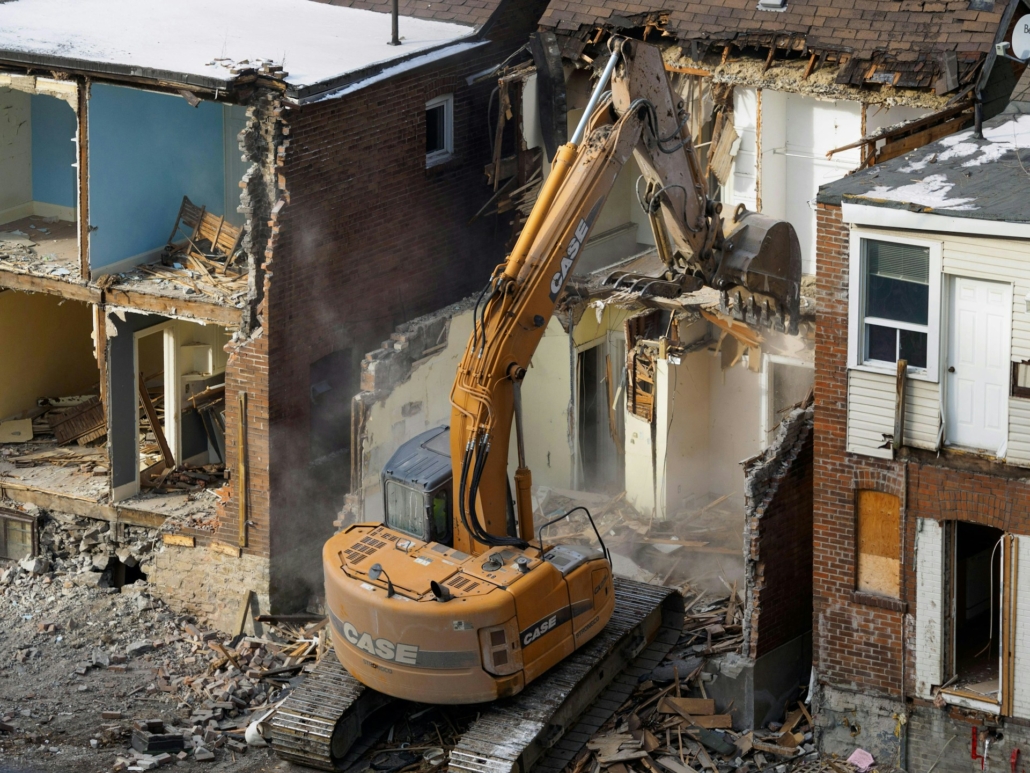
Demolition Day: What Actually Happens
This is when the action really starts, but it happens with structure and planning. Demolition is not random smashing. It’s done section by section so materials can be separated and handled correctly.
- We bring the right machines in, depending on the size and structure of the house. Most detached Brisbane homes can be brought down in a day or two.
- The roof is usually taken off first, then the internal walls, and finally the slab or stumps.
- Materials like brick, timber, and concrete are sorted onsite. Recyclables are sent to the right processors, and waste is removed.
During a knock down in Brisbane, managing weather is a big factor. A sudden downpour can turn dirt into mess, so if the forecast looks risky, we may delay by a day or two. We always prioritise site safety and protection of neighbouring properties during works.
After the main structure comes down, we take care to separate materials carefully. Recyclable matter is sent to be processed, and waste is cleared off the site. Equipment is moved safely to make sure nothing gets damaged and the neighbourhood stays tidy.
Site Prep After the Dust Settles
Once the house is fully gone, the job isn’t over. We spend some time checking the ground to make sure everything is ready for what’s coming next, usually a new build designed from scratch.
- The block is levelled and checked for any leftover roots or concrete that might affect construction.
- We sometimes find soil that needs improvement after demolition, especially near older footings or areas that had poor drainage in the past.
- This is also when we confirm if retaining is needed along boundaries, especially on Brisbane’s sloping blocks.
A good prep at this stage makes the build smoother. Slab plans are easier to finalise when we know the site is clean and even. If anything unexpected turns up under the old home, like old drainage pipes or structural remains, we remove them and adjust the plans as needed.
It’s a time of careful checks and small corrections. This attention to detail avoids larger headaches down the road. By getting these steps right, the next stage is a lot more straightforward.
Life Between Knock Down and Rebuild
There’s usually a bit of a gap between knocking down and starting the new build. Approvals can still be processing, or contracts might be in final stages. During this time, planning and communication matters more than ever.
- Most people live elsewhere while we work. If there’s a tight timeframe, we help plan so there’s less time waiting between demo and the start of construction.
- Builders and clients stay in contact during this stage. We update progress on paperwork and share final versions of designs for signoff.
- Once we’re given the green light, we schedule excavation, set up service lines, and prep for the slab.
This is the best time to make changes to plans or materials, before any physical work begins. Once the slab is down, changes can slow the build.
Having this short pause can be useful; it allows for final decisions and fresh discussions. Communication is key at this stage, as it ensures any last adjustments are included before the build truly gets underway.
Starting Fresh with a Clear Block
Understanding the full process behind a home knock down helps take the pressure off. There’s a lot happening behind the scenes before any building even starts. Every step, from disconnections to council checks, plays a part in how well the next stage goes.
By getting the details right early, we keep the rebuild moving forward with fewer hold-ups. It’s not just about pulling down a house. It’s about clearing the way for something stronger, smarter, and suited to Brisbane’s climate and block shapes. When the ground’s ready and plans are approved, the next stage can begin with confidence.
Why Trust Us for Your Brisbane Knock Down?
At Liona Constructions, we offer complete knock down and rebuild services across Brisbane and can manage the full process, from all council paperwork to demolition, site clearing, and new home planning. We adapt every stage to the unique needs of your block and requirements, using our experience to guide the safest, most practical outcome from planning to handover.
Planning a knock down in Brisbane is simpler with an experienced team by your side. We handle every aspect, from thorough site assessments and council paperwork to coordinating demolition and preparing your block for the next stage. Our commitment is to ensure a seamless process so you can move ahead with confidence. Discover how we expertly manage each phase of a knock down in Brisbane with Liona Constructions and start your fresh build journey. Contact us to discuss your vision today.


Leave a Reply
Want to join the discussion?Feel free to contribute!